

What To Do With Your CD Money

Death_to_stock_communicate_hands_3

If you’ve had CDs mature over the past several years, you’ve faced the unfortunate reality of having to choose between reinvesting into a new CD that pays a miniscule rate, or moving your money into riskier assets and giving up your guaranteed rate of return and safety. Although you can earn a higher coupon with corporate bonds than CDs, those investments are volatile and definitely not guaranteed. I understand the desire for many investors to keep a portion of their money invested very conservatively in ultra-safe choices. So, I checked Bankrate.com this week for current CD rates on a 5-year Jumbo CD and here is what is offered by the largest banks in our area:

Bank of America 0.15%
JPMorgan Chase 0.25%
Wells Fargo 0.35%
Citibank 0.50%
BBVA Compass 0.50%

While there are higher rates available from some local and internet banks, it is surprising how many investors automatically renew and do not search for a better return. Others have parked their CD money in short-term products or cash, hoping that the Fed’s intention of raising rates in 2016 will soon bring the return of higher CD rates.

Unfortunately, it’s not a given that the economic conditions will be strong enough for the Fed to continue to raise rates in 2016 as planned. This week, the 10-year Treasury yield dropped below 2%, which is not strong endorsement of the likelihood of CD rates having a major rebound in 2016.

This is the new normal of low interest rates and slow growth. While rates could be nominally higher in 12 months, it seems very unlikely that we will see 4% or 5% yields on CDs anytime in the immediate future. Waiting out in cash is a sure-fire way to not keep up with inflation and lose purchasing power.

What do I suggest? You can keep your money safe – and earn a guaranteed rate of return – with a Fixed Annuity. I only recommend Fixed Annuities with a multi-year guaranteed rate. Like a CD, these have a fixed interest rate and set term. At the end of the term, you can take your investment and walk away.

Today, we can purchase a 5-year annuity with a rate of 2.9% to 3.1%, depending on your needs. I know that’s not a huge return, but it’s better than CDs, savings accounts, Treasury bonds, or any other guaranteed investment that I have found. Since an annuity is illiquid, I suggest investors set up a five year ladder, where each year 20% (one-fifth) of their money matures. When each annuity matures, you can keep out whatever money you need, and then reinvest the remainder into a new 5-year annuity.

The beauty of a laddered approach is that it gives you access to some of your money each year and it will allow your portfolio to reset to new interest rates gradually as annuities mature and are reinvested at hopefully higher rates. In the mean time, we can earn a better return to keep up with inflation and keep your principal guaranteed.

Issued by insurance companies, Annuities have a number of differences from CDs. Here are the main points to know:

  • Annuities typically have steep penalties if you withdraw your money early. It’s important to always have other sources of cash reserves for emergencies. Consider an annuity as illiquid, and only invest long-term holdings.
  • If you take money out of an annuity before age 59 1/2, there is a 10% premature distribution penalty, just like a retirement account. A 5-year annuity may be best for someone 55 or older.
  • Money in annuity grows tax-deferred until withdrawn. If you rollover one annuity to another, the money remains tax-deferred. Most annuities will allow you to withdraw earnings without penalty and take Required Minimum Distributions (RMDs) from IRAs. Always confirm these features on an annuity before purchase.
  • While CDs are insured by the FDIC, annuities are guaranteed at the state level. In Texas, every annuity company pays into the Texas Guaranty Association, which protects investors up to $250,000. If you have more than this amount to invest, I would spread it to multiple issuers, to stay under the limit with each company.

If you have CDs maturing and would like to learn more about Fixed Annuities, please contact me for more information.

Are Smart Beta ETFs Right for You?

Death_to_stock_communicate_hands_9

Over the past several years, you may have heard about “Smart Beta ETFs”. Today, we will look at this concept and share some very important caveats that investors should know before they purchase a Smart Beta ETF for their portfolio. While the name sounds like it would be a sure thing, it is important for investors to understand that there is no guarantee that Smart Beta products will be able to deliver on their promises.

The first ETFs were all index funds, tracking major indices like the S&P 500 or the Dow. As ETFs grew in popularity, investment companies quickly added products representing other indices, sectors, styles, and countries. ETF companies will continue to create hundreds of new products each year to raise new assets and be able to charge more fees. Once every traditional index was replicated in an ETF, companies had to find more creative offerings. Will every product work and be successful? No, but there is such a pronounced first-mover advantage in the industry that many companies are willing to take the risk of launching dozens of new funds hoping that some will be a success.

The knock on traditional index ETFs is that they are weighted by market capitalization. That simply means that each stock is represented according to its total market value. What’s wrong with that? If you went back to 1999, Cisco briefly became the largest stock in the world, trading at over 100 times earnings. At that time, it represented more than 3% of every index fund. And when the stock fell by 90% during the tech crash, every index fund had a large loss. The problem with traditional index funds is that they have too much of the overvalued stocks and too little of the undervalued companies.

Smart Beta ETFs seek to avoid this issue of overweighting the most expensive stocks by using alternative weighting or selection criteria. Like an Index, Smart Beta is a hands-off strategy that is quantitatively driven and passive. There are quite a few different approaches to Smart Beta, including weighting by:
– Dividends (stocks represented by the size of their dividend stream)
– Volatility (emphasizing the Lowest Volatility stocks or combination of stocks)
– Fundamentals (such as book value, sales, or earnings)
– or even, equal weighted, where each company receives the same weight in the fund.

Here are five points you should consider before selecting a Smart Beta ETF.

1) Traditional indexing works well.
While the concern of overweighting expensive stocks sounds legitimate, I’d like to point out that in spite of this supposed flaw, a vast majority of actively managed funds fail to beat their benchmark over five years. According to the S&P Index Versus Active report, as many as 80% of active managers fall short. If it was so easy to pick out the undervalued stocks from the overvalued stocks, wouldn’t more fund managers be able to beat the market cap weighted index?

Everyone is looking for a way to out perform the market, but this remains very difficult to do. It will be interesting in 10 years to see how many of today’s Smart Beta products will have delivered superior returns.

2) Back-tested strategies do not always work as well going forward.
Smart Beta ETFs are created based on academic research looking at factors which would have produced strong returns historically. This is generally done using back-tested data, which gives us another concern. If we looked at stocks from 2000-2015, it was a very unusual period. Will the factors which worked over the past 10 or 15 years continue to generate market beating returns over the next 10 or 15 years? No one knows the answer to that; the future could be quite different than the past and back-tested strategies may not perform as hoped.

3) Smart Beta may be out of favor for extended periods.
The back-tested results look promising, with Smart Beta strategies beating their benchmarks, had the ETFs existed. While the long-term hypothetical returns look good, there can be stretches when this strategy is out of favor. It may have outperformed over 10 years, but it may have lagged in four, five, or even six of those years, only to make it up by strong performance in a couple of years. If you buy a Smart Beta ETF today, will you hold on to it if it lags the market for two years in a row? Three years in a row?

Some Smart Beta strategies correlate strongly with Value and will lag when Growth is in favor. Other strategies are defensive and will trail the market during bull markets and only enhance performance in bear markets. This makes for a difficult decision as to whether or not the current market is the right environment for a particular approach or factor. This creates the potential for market timing errors if investors chase returns by switching from one ETF to another, trying to capture the most advantageous style for any given year.

4) Smart Beta ETFs may be less diversified.
Since Smart Beta funds emphasize certain characteristics such as dividends, the funds may have a high concentration in specific sectors such as utilities, financials, or energy. In the years where those sectors perform poorly, Smart Beta funds could be volatile and disappointing.

5) Costs
Lastly, it’s not certain that the benefits of all Smart Beta funds will accrue to investors once we factor in the expense ratio, trading costs, and taxes. Luckily, ETFs are becoming highly competitive in terms of expenses, so many funds launched in the last two years have extremely low expense ratios. While we know the expense ratio, we don’t know what trading costs are incurred when a Smart Beta strategy buys and sells stocks, which most do on a quarterly or annual basis.

I’ve listed these five concerns about Smart Beta ETFs because I want to dispel the notion that these funds are a sure bet. However, I do think they are interesting and show promise. Perhaps some will deliver results. And this is another conundrum for investors: there are so many flavors of Smart Beta strategies today that we run the risk of picking the wrong one, and we end up with the fund that under performs. So this is not the simple choice of just replacing all of your traditional ETFs with a Smart Beta version and being guaranteed better results.

We’ve spent a lot of time analyzing Smart Beta ETFs and have included several in our clients’ portfolios. If you are looking to hand off your portfolio management to a professional, we are here to help. And while we manage your funds, we also take the time to explain our process, philosophy, and why we own each position.

The Investor and Market Fluctuations

The Intelligent Investor

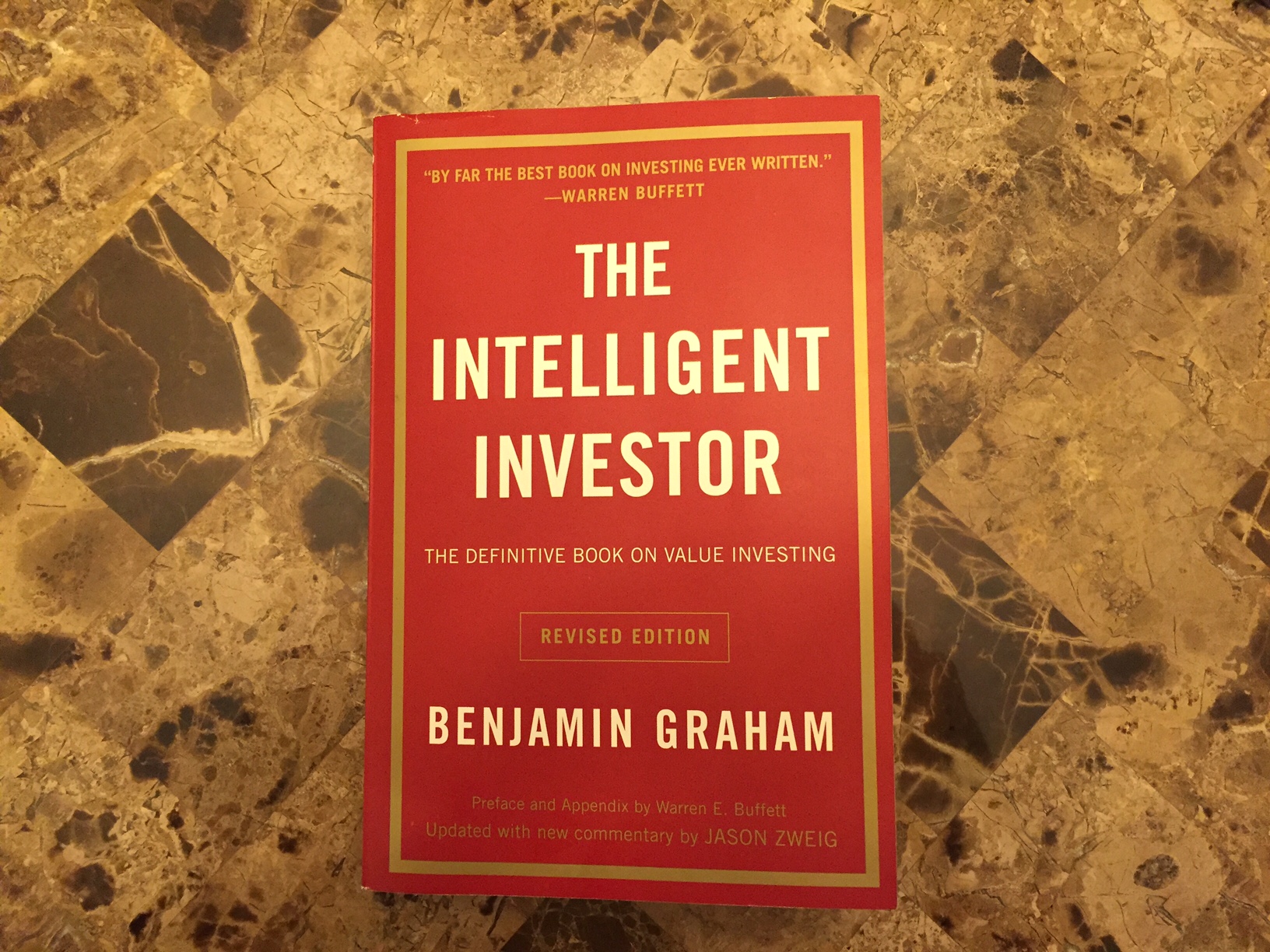
In 1934, Benjamin Graham first published his treatise “The Intelligent Investor”. Graham is considered by many to be the father of Value Investing and was a teacher of Warren Buffett. He wrote about the difference between investing and speculating, and devoted a whole chapter to “The Investor and Market Fluctuations.” I can do no better than to share this excerpt and to note that his advice is as true today as it was 80 years ago.

“The most realistic distinction between the investor and the speculator is found in their attitude toward stock-market movements. The speculator’s primary interest lies in anticipating and profiting from market fluctuations. The investor’s primary interest lies in acquiring and holding suitable securities at suitable prices. Market movements are important to him in a practical sense, because they alternately create low price levels at which he would be wise to buy and high prices at which he certainly should refrain from buying and probably would be wise to sell.

It is far from certain that the typical investor should regularly hold off buying until low market levels appear, because this may involve a long wait, very likely the loss of income, and the possible missing of investment opportunities. On the whole it may be better for the investor to do his stock buying whenever he has money to put in stocks…

Aside from forecasting the movements of the general market, much effort and ability are directed on Wall Street toward selecting stocks or industrial groups that in matter of price will “do better” than the rest over a fairly short period in the future. Logical as this endeavor may seem, we do not believe it is suited to the needs or temperament of the true investor… As in all other activities that emphasize price movements first and underlying values second, the work of many intelligent minds constantly engaged in this field tends to be self-neutralizing and self-defeating over the years.

The investor with a portfolio of sound stocks should expect their prices to fluctuate and should neither be concerned by sizable declines nor become excited by sizable advances.”*

As much as markets have changed over the past century, what has not changed is human nature. That’s why Graham’s advice to never sell a stock just because it has gone down remains so relevant today. Be an investor and not a speculator; don’t think that you can predict what stock prices are going to do next. If you’re in it for the long-term, use market volatility as an opportunity to put money to work.

*The Intelligent Investor, Benjamin Graham, `Revised Edition, 2006, pp. 205-206.

The Psychology of Volatility

Death_to_stock_photography_wild_7

We’ve had a rough start to 2016, with stocks dropping across the board. Today, we are within a couple of percentage points of retesting the lows of last August. You can’t pick up a newspaper or tune into a business show on TV without being bombarded with the “reasons” why the market is down.

The key to success for investors, I would argue, is not in understanding the economy, interest rates, or corporate earnings. Rather, it is knowing what to do in volatile times.

There are two types of losses: a temporary drop and a permanent loss. Enron was a permanent loss. Single securities (stocks or bonds) can go to zero, and this does happen from time to time, especially in high risk situations. However, if you are investing in a diversified fund, such as the Russell 1000 Index ETF, the impact of a single stock going bankrupt is very, very small.

Volatility is the reality that security prices do not move up in a straight line, but fluctuate up and down over the short to medium term. The challenge is that it is difficult for our brain to distinguish between a temporary drop (market volatility) and a permanent loss.

The anxiety from a loss can cause not just emotional stress, but actually trigger a physical response in our body chemistry. The evolutionary response to danger is to flee, which for investors, means the strong urge to get out of the market, protect our capital, and stop the pain we are experiencing.

Unfortunately, selling during a period of market volatility has the tragic consequence of turning a temporary drop into a permanent loss. Most investors under perform the overall market precisely because they sell during times of stress. It is essential to recognize that market volatility is just a temporary drop for a long-term investor and be willing to stay the course during these periods.

Here’s how we can use this behavioral understanding to our benefit:

1) Many investors would say that the past 15 years have been horrible in the stock market. The reality is not so bad; if you had invested in the S&P 500 Index ETF (SPY), you would have had a 4.97% annualized return over this period. That equates to a 107% total return, a little more than a double. That’s better than most would assume, because the agony of the losses we’ve experienced is much more intense and memorable than the gains we have actually received. This phenomenon is called loss aversion.

2) If we reframe market volatility as “opportunity” rather than “danger”, then we can profit by being willing to buy when the market is down. People love buying their holiday presents when stores have a 20% sale, but when the market drops 20%, no one wants to invest. If you view a drop as a great chance to buy stocks on sale, then you will realize that the past 15 years have given investors incredible opportunities to profit. And while we shouldn’t try to time the market, we can dollar cost average by making regular contributions to our accounts to take advantage of volatility.

3) We have each client complete a risk tolerance questionnaire before investing. Our goal is to choose an asset allocation which we can stick with, through the inevitable ups and downs that will follow. It’s easy to be aggressive when the market is moving up, but it’s better to invest with an understanding of how you will feel when the market does have a correction.

4) Many investors will create a long-term investment strategy and then proceed to evaluate their portfolio performance on a very frequent basis, such as monthly, daily, or even hourly. The more often you look at your portfolio, the more often you will be tempted by the thought of “Don’t just sit there, do something!” This is where we have to recognize that the emotional, physical urge to react is at odds with the rational process of sticking to a plan. If you want to act in a long-term manner, you cannot think in terms of short-term results. For many of us, it is better to look at your accounts less often, rather than more often.

No matter what you’re feeling about the current market volatility, remember that I am just a phone call away and happy to listen to your concerns, talk strategy, and share the opportunities available in today’s market.

Data from Morningstar, as of 12/31/2015

Exchange Traded Funds Gain in Popularity

DeathtoStock_Clementine3

According to a report from Blackrock this week, investors poured $347 Billion in Exchange Traded Funds (ETFs) in 2015. In recent years we have seen the shift from mutual funds to ETFs continue and even accelerate. While we don’t have numbers for mutual funds for 2015 quite yet, according to the Investment Company Institute, investors had already pulled $47 Billion from mutual funds as of November 30, 2015.

Even though ETFs continue to take market share from mutual funds, I find that many folks who have invested primarily in a 401(k) still aren’t very familiar with ETFs. Here are some of the reasons we are big fans of ETFs.

  • ETFs generally use passive strategies, such as tracking an index, or selecting stocks based on specific criteria. Since the majority of active managers fail to beat their benchmark over five years, passive strategies are a logical choice.
  • ETFs are very low cost, since passive strategies don’t require a large research staff or highly paid managers. And in a low return world, it can be very difficult for an actively managed fund with 1.10% in expenses to beat a passive ETF which has expenses of 0.10%.
  • ETFs are typically more tax efficient than mutual funds. Quite a few mutual funds distributed capital gains at the end of 2015. If you held those funds in a taxable account, you’d owe taxes, even though you didn’t sell any of your shares. If you had ETFs in your taxable account, your tax bill may have been much, much lower, or even zero.
  • ETFs offer diversification, transparent holdings, and style consistency. That’s why they make great building blocks to construct an efficient portfolio.

Wonder how your mutual funds stack up against ETFs? Call me for a free portfolio review and we will be happy to take a look and share our recommendations.

How to Succeed at Financial Resolutions

DeathtoStock_NotStock2

I know that New Year’s Resolutions are often lampooned as pointless and misguided, but I, for one, love the idea that people can change and take steps to improve their life. To me, a resolution is the wonderful intersection of optimism to motivate you and realism to recognize that it takes hard work to accomplish worthwhile goals.

Fidelity Investments has undertaken a New Year Financial Resolutions Study for seven years and found that individuals who started 2015 with a financial resolution feel more optimistic, are more debt-free, and feel more financially secure than individuals who did not make a resolution. The key to succeeding with a resolution, in my experience, is having the ability to translate a desire into a clear objective, determining how to accomplish that goal, and then having the discipline to stick to your plan.

In other words, a New Year’s Resolution is just a small scale financial plan. Here are three categories of financial resolutions and how to best achieve those objectives:

1) That one thing you’ve been putting off. A lot of times, people have something they know they should be doing, but haven’t started. Maybe they don’t know where to begin, are overwhelmed by the number of decisions they will have to make, or maybe there just never is enough time.

Here are some classic examples of financial needs that many organized, otherwise responsible people have not “gotten around to”:

  • Starting a college fund for children or grandchildren.
  • Securing a term life insurance policy to protect your spouse or loved ones.
  • Establishing your will and estate planning documents.

If these are on your “keeps me up at night” list, give me a call and we will accomplish these in no time. You haven’t done this before, but we do this all the time. Start now and you could have these New Year’s Resolutions wrapped up before the end of January!

2) Save more. Many families worry they are not saving as much as they should. For some, it may be setting up an emergency fund; for others it may be saving for retirement, college, or other long-term goals.

Whatever your investment need, you are more likely to be successful when you put your saving on auto-pilot with electronic monthly contributions. When you pay yourself first every month, most people find they don’t even miss the money. Spending often takes up whatever amount we don’t save; if we recognize this, then we can also understand that it is usually very easy to adjust our discretionary expenses when our saving is automatic.

While the 401(k) is the classic example of automatic investing, we can just as easily use the same approach for an IRA, taxable joint account, 529 college savings plan, or any other type of investment vehicle. Saving more doesn’t happen by accident. You can’t wait until next December to do something if you expect to be a good saver in 2016.

3) Reduce Debt. If you are looking to reduce your spending to get out of debt, you can follow the same advice of making automatic monthly payments. Focus on paying down your highest interest rates loans first.

If you’re not sure where your money goes every month, your first step is to get better organized. Technology can be a big help; consider an app like Mint or Quicken to track your spending. Increasing your self-awareness is an essential step towards changing behavior.

A financial planner can help you with all of your financial questions and goals. Besides bringing expertise, training, and real world experience, a planner can also offer two of the most important elements of success: a concrete plan and accountability to stay on course.

If you are thinking about including financial goals in your New Year’s Resolutions, don’t go it alone, give me a call! I’m here to help.

The Year Ahead in Equities

Death_to_stock_photography_wild_6

We began 2015 with the following the following observations about the equity markets: US stocks were fully valued and ripe for a possible correction. Small cap stocks were trading at a premium to large cap and should not be overweighted. European equities were cheaper than US stocks, while their economic recovery continued to lag the US recovery. Emerging markets equities were trading at a significant discount to developed markets, which was related to declining commodity prices.

12 months later, as we near the close of 2015, all of these factors remain in place, and at an even more exaggerated level than at the beginning of the year.

US large cap stocks did finally have a correction of 10% at the end of August. While the fear was that this correction would become the start of a bear market, instead, markets snapped back smartly and erased those losses by early October. That’s the good news. The bad news is that we have failed to make new highs in Q4 and the market seems to be range bound, trading around the same levels that frustrated investors in the first half of the year.

Looking forward to 2016, earnings for the S&P 500 Index are expected to be under pressure from two factors. First, the remarkable collapse in oil prices has decimated earnings in the energy sector. Second, the strong dollar is a headwind to multi-national companies who either export US goods overseas (which are now quite expensive to foreign consumers), and earnings of foreign subsidiaries appear smaller, when translated back into US dollars. As a result, earnings for the S&P 500 could actually show negative growth this quarter and may show little growth for all of 2016. And if there’s no growth, the current price to earnings ratio of 18.5 seems difficult to justify.

For US Small Cap stocks, years of strong performance pushed valuations to high levels. While large caps sport a PE ratio of 18.5, the small cap Russell 2000 Index has an even more bloated valuation of 20.8.

Foreign developed stocks greatly lagged US stocks in 2014, when they were down 5% versus a gain of 13% for their US counterparts. For 2015, both US and Foreign stocks are almost flat on the year. Looking forward, the important difference is valuation. While US stocks have a PE of 18.5, foreign stocks are cheaper, with a PE of 16. International stocks have much better valuations across the board, including price/book, price/sales, and dividend yield.

While the US recovery seems to have been in place for several years, the fact that Europe’s recovery has been delayed gives some hope that their stocks also have some catching up to do.

Emerging Markets have had a dismal 2015, down 16% year to date. In sprite of the carnage, valuations are very cheap, and demographics are favorable for long-term growth. While GDP growth in the US, Europe, and Japan risks being crowded out by government debt and retiree costs, Emerging Market economies remarkably have lower debt levels and a better balance sheet.

EM is being held back in part by low commodity prices, which are the largest source of trade revenue for many countries. As a contrarian, if you compare the past 5 years of performance in EM versus US stocks, and look at current valuations, you have to believe that these divergent results are going to inevitably reach an inflection point. Will that occur in 2016? No one knows, but we will maintain our holdings in EM and wait for a reversion to the mean.

I’ve been bearish on Commodities for several years. At my previous firm, we did hold a multi-million dollar piece of commodities within our equity allocation. In 2013, I suggested we exit the space, which we did, sparing our investors from substantial losses. Now with oil futures trading at $35/barrel, I’m starting to wonder how much lower can they go? Will we breach the $32/barrel price we saw in 2009, at the depths of the global recession? Production is being shuttered across commodity producers around the globe, and yet short-term supplies remain high.

I don’t know when commodity prices will stop falling, but I have to believe we are closer to the 8th or 9th inning of this decline and not somewhere in the middle. At some point, it will make sense for investors to have a small piece of commodities, as it offers a possible inflation hedge, and can be uncorrelated to both equities and fixed income, where we face rising risks.

We will be making small changes to our model portfolios in January to reflect the current state of fixed income and equity markets. While we are somewhat tactical in our approach, we don’t want to give the impression that these trades are the primary source of investment performance. Ultimately, the most important part of investing is staying diversified, keeping costs down, and rebalancing periodically.

Source of data: Morningstar as of 12/20/2015

The Year Ahead in Fixed Income

Death_to_stock_photography_wild_1

At the end of each year, we review the landscape for fixed income and equities, looking for opportunities and themes to use in our model investment portfolios. With this information, we adjust the weight of asset categories based on their relative risk/reward, and also decide which satellite categories offer the most interesting ways to enhance and complement our core holdings. This week, we start with a look at fixed income.

With today’s low interest rates, it should come as no surprise that the Aggregate Bond Index is only up 1.17% through December 11 this year. This small number belies the potential risks to the bond market in 2016, including the possibility for rising rates to crush long-term bond prices, falling credit quality and increased defaults in the energy sector, and the many unknowns about the rising US dollar and future inflation. And perhaps the only thing worse than seeing inflation tick up in 2016 would be seeing no inflation, a sign that the global economy could be moving back into recession.

The Federal Reserve is meeting on Tuesday and Wednesday this week, and many on Wall Street are watching to see if the committee is finally ready to raise the Fed Funds rate. This will likely be a major focus of the business news of the week, but in spite of all the attention paid to deciphering the Fed’s actions and comments, this is not a reason to be making knee-jerk reactions to Fixed Income holdings.

We see four major themes which will shape how we allocate to Fixed Income in 2016:

1) An emphasis on shorter duration. Whether or not the Fed raises rates this week, we are at a point in time at which the rates on 20-30 year bonds are artificially low. If we consider the yield to maturity as the potential reward for buying these bonds, then the risk we face in terms of a significant decline in price, as well as the opportunity cost to have purchased binds at a higher yield, is too great.

Within all our portfolios, we will look to reduce risk in our Fixed Income holdings, emphasizing shorter duration while maintaining or improving credit quality. We’re not interested in speculating on bonds, which is precisely what many investors are doing today with long-term bonds.

2) Sticking with high yield. We already have positioned our high yield holdings into a short duration fund, the SPDR Short-Term High Yield ETF (SJNK). SJNK has taken a beating this year, down 6.49% as of 12/11. While it’s easy to see the challenges facing high yield, the lower prices present a more attractive value than we’ve had in several years in the category. Today, the fund has an average maturity of only 3.12 years, an average bond price of $95.03, and a yield to maturity of 9.42%. In small portions, this short-term high yield position may help enhance our returns.

3) Municipal Bonds. Municipal Bonds have been held back by concerns about over-leveraged entities such as Detroit and Puerto Rico. At the start of 2015, munis were trading at a discount to other bonds, and that discount gave way to a strong performance in 2015. Even though they have come up in price somewhat, for investors in a higher tax bracket, municipal bonds remain very attractive compared to corporate or treasury bonds. For clients with large taxable holdings, we will likely add to municipal bonds in 2016.

4) Fixed Annuities. I’ve always admired the simplicity of a laddered portfolio of high quality bonds or CDs. In recent years, investors have gotten away from this approach, as they searched for higher yields elsewhere. Unfortunately, there is no free lunch – higher yields come with higher risks – and investors who always seek the highest yielding investments sometimes end up with losses rather than the high returns they had hoped for.

For investors who are 55 or older, who do not need liquidity from their holdings, consider creating a ladder of 5-year fixed annuities, buying one-fifth a year over 5 years. Today, we can buy a 5-year annuity at 3.10%, which is not bad for an investment with a guaranteed return. To get the same yield to maturity on a 5-year bond, we’d have to go a BBB-rated issuer or lower. The annuity may also be a good replacement for a CD, if you are disappointed with today’s rates when your CDs mature.

A laddered 5-year annuity portfolio could make sense for conservative investors because it offer a guaranteed rate of return, preservation of capital, and income, none of which are guaranteed with most other types of bonds. The main trade-off would be liquidity, but if you have a 5-year ladder, you’d have access to 20% of your principal each year. I’ve looked at other annuity durations, but feel that the 5-year is the sweet spot today. Shorter terms have a much lower interest rate, while longer terms do not see much of an increase over the 5-year product.

We will use these four themes to help customize each of our client’s fixed income holdings, even though changes to the model portfolios are likely to be relatively small. We have low expectations from fixed income for 2016 and the next several years. Our focus is not “how can we make as much as possible from bonds”. Rather, we view fixed income as a counter-weight to the risk we take in equities; its main purpose is to reduce the volatility of the overall portfolio. That’s why we want to be very careful about taking risks in fixed income at a time which might be the end of the falling interest rates which have boosted bond prices over the past 35 years.

Today, equities are near a high, even as the global economy struggles to sustain a recovery. Prices in fixed income are also at a high. This is a dangerous time for investors who have become greedy with yield in the recent period of rock-bottom rates. Once rates do begin to rise, fixed income will face a tough road, and that could become a very ugly situation if the stock market is also impacted by rising interest rates, decreased liquidity for corporations, and increased defaults.

Real Estate prices, fueled by cheap mortgages today, will also struggle to rise if homeowners cannot afford higher payments, and commercial Real Estate prices won’t be attractive to investors if cap rates are lower than bonds. I point this out not because I expect a crisis, but only because investors need to understand the potential impacts of higher interest rates in 2016 and ahead.

Next week: the outlook for Equities in 2016.

Source of data: Morningstar as of 12/14/2015

2016 Contribution Limits and Medicare Information

picjumbo.com_HNCK3303

Inflation was almost non-existent in 2015 due to falling commodity prices. This means that for 2016, most of the IRS contribution limits to retirement accounts are unchanged. Zero inflation creates some unique problems for Social Security and Medicare beneficiaries, which we will explain.

If you are automatically contributing the maximum to your retirement plan, good for you! You need not make any changes for 2016. If your contributions are less than the amounts below, consider increasing your deposits in the new year.

2016 Contribution Limits
Roth and/or Traditional IRA: $5,500 ($6,500 if age 50 or over)
401(k), 403(b), 457: $18,000 ($24,000 if age 50 or over)
SIMPLE IRA: $12,500 ($15,500 if age 50 or over)
SEP IRA: 25% of eligible compensation, up to $53,000
Gift tax annual exclusion: $14,000 per person

Tax brackets and income phaseouts increase slightly for 2016, but there are no material changes. People are still getting used to the new Medicare surtaxes, which include a 3.8% tax on net investment income (unearned income), and a 0.9% tax on wages (earned income). The surtax is applied on income above $200,000 (single), or $250,000 (married filing jointly).

Capital gains tax remains at 15%, with two exceptions. Taxpayers in the 10% and 15% tax brackets pay 0% capital gains, and taxpayers in the 39.6% bracket pay a higher capital gains rate of 20%. For 2016, you will be in the 0% capital gains rate if your taxable income is below $37,650 (single) or $75,330 (married).

For Social Security recipients, the Cost of Living Adjustment (COLA) for 2016 is 0%. We previously had a 0% COLA in 2010 and 2011, and it creates an interesting situation for Medicare participants. Medicare Part A is offered free to beneficiaries over age 65. Medicare Part B requires a monthly premium.

Part B premiums should be going up in 2016, but about 75% of Part B participants will see no change, thanks to Social Security’s “Hold Harmless” provisions. The “Hold Harmless” rule stipulates that if Medicare Part B costs increase faster than Social Security COLAs, beneficiaries will not have their SS benefits decline from the previous year. And since there is no COLA for 2016, any Medicare Part B premium increase would cause SS benefits to negative.

For the past three years, Part B premiums have remained at $104.90 per month. You are eligible for no increase under the “Hold Harmless” rule, if you are having your Part B payments deducted from your Social Security benefit AND you are not subject to increased Medicare premiums under the Income Related Monthly Adjustment Amount (IRMAA).

For most Part B recipients, Medicare premiums are fixed. For higher income participants, IRMAA increases your premium, as follows for 2016:

MAGI $85,000 (single), $170,000 (married): $170.50
MAGI $107,000 (single), $214,000 (married): $243.60
MAGI $160,000 (single), $320,000 (married): $316.70
MAGI $214,000 (single), $428,000 (married): $389.80

If you fall into one of these income categories, above $85,000 (single) or $170,000 (married), you are ineligible for the “Hold Harmless” rule and will have to pay the premiums above, even if this causes your Social Security benefit to decline from 2015.

If you are delaying your Social Security benefits and pay your Part B premiums directly, you are also ineligible for the “Hold Harmless” rule. Finally, if you did not participate in Social Security, for example, teachers in Texas, you would also not be eligible for the “Hold Harmless” rule.

The Benefits of an Older Car

IMG_5676

The average car on the road today is 11.5 years old today, according to USA Today. Today’s cars are more dependable and long-lasting than ever and yet for many consumers, transportation remains their second largest expense after their home.

Last November, I purchased a used car, and not the typical 2-3 year old gently used vehicle, but a 2002 Toyota 4Runner with 179,097 miles. I wanted a larger vehicle to transport my three big dogs and wanted something I wouldn’t worry about getting muddy or scratched.

Admittedly, I have been leery of older cars. What if they break down? The last thing anyone wants is to have unexpected large expenses trying to keep a dying vehicle on the road. And I especially do not want to have an unreliable or unsafe vehicle when it is 102 degrees in July or 20 degrees in January.

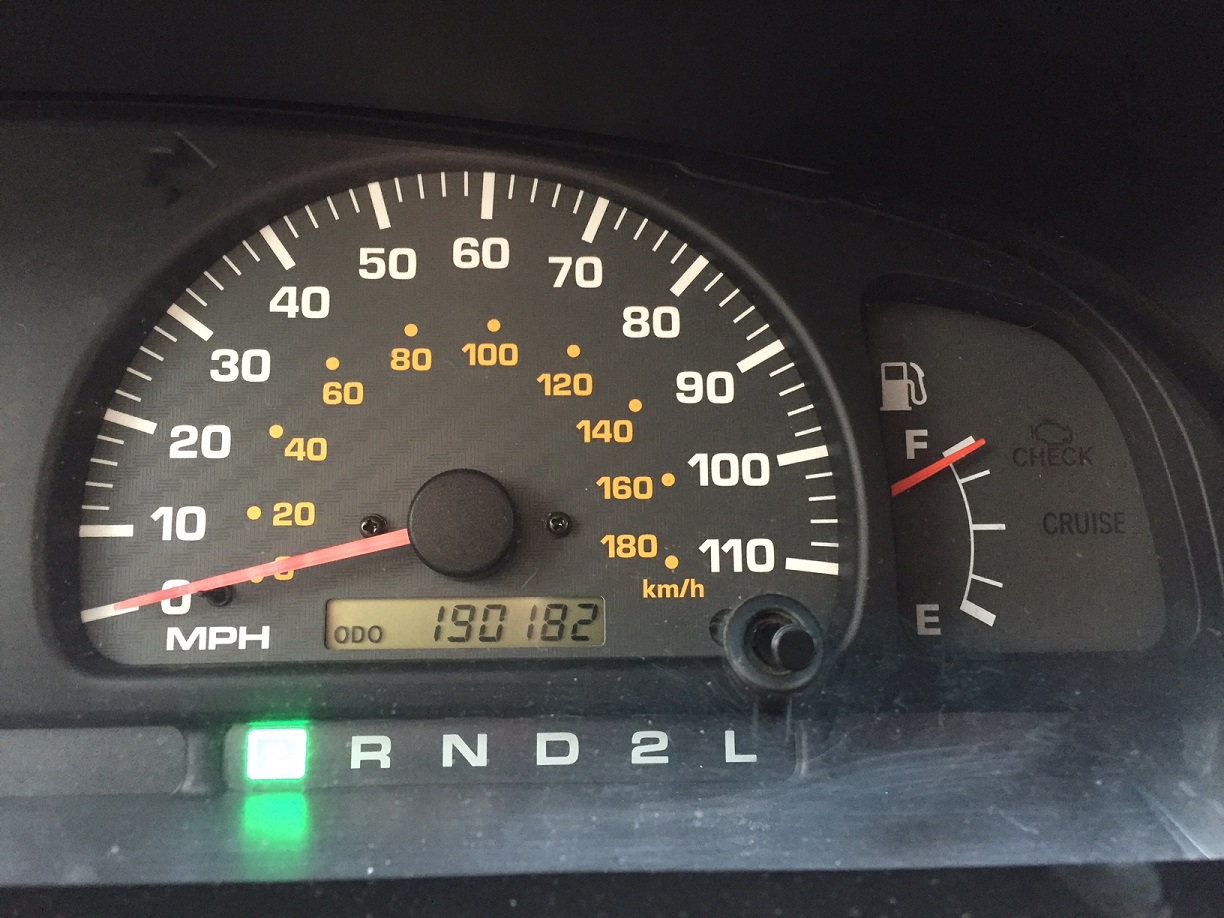
Well, I’ve lived with my old car for a year now and will give you a full report, including a breakdown of all my costs. I drove the car almost every day and put just over 11,000 miles on this year (the photo is my current odometer reading: 190,182 miles). During that time, it has been 100% reliable (knock on wood…). The car has always started and worked perfectly. I have had zero breakdowns and no unplanned maintenance.

As a student of behavioral finance, I think people’s car buying choices are interesting to study. Most of us buy what we want, but then create a rationalization that sounds good for why we “need” a new car. Oftentimes, it’s really about projecting an image of success or trying to fit in with others in the office, neighborhood, or group of friends.

Many people prefer a new car, under warranty, to avoid the unpleasantness of having to pay for car repairs. This is known as “loss aversion”, which means that the pain of a $500 loss is much more intense and memorable than the satisfaction of a $500 gain.

Getting a new car every three years may cost $400 or $500 a month regardless of whether you lease, finance, or pay cash. With an older car, your depreciation can be very small, and instead your main expense is typically maintenance. You may end up spending $800 twice a year in repairs and upkeep. That sounds terrible, but which costs more: $400 a month, or $800 twice a year?

Having a used car may leave you on the hook for unplanned repairs, but the chances are good that those repairs will be a small fraction of the ongoing cost of getting a new car every three years. It’s loss aversion that makes $1,600 a year in unplanned repairs feel much worse than the fact that you might save $400 a month ($4,800 a year) by not having a car payment.

I paid $4,500 for my Toyota, and had to pay $316.75 in sales tax and registration fees. My biggest expense for the year was for a set of four new tires, $744.84. I did all the work on the car myself, including three oil changes, replacing the rusty radiator, hoses, and thermostat. I changed the fluids, including brake, transmission, power steering, and differential oil. I installed a new air filter, PCV Valve, and wipers, and cleaned the intake twice. In total, I spent $521.23 on maintenance, which was quite low since I did the work myself.

According to Kelly Blue Book, the current value of my vehicle is $4,044, so my estimated depreciation for the year was $456. Including depreciation, my cost for the year was $2038, which works out to 18.4 cents per mile (not including fuel). My insurance cost was much lower with this car; I kept the same high level of liability coverage as my other vehicles, but dropped collision. The annual insurance premium was $510.40, less than half the cost of our other vehicles.

What are the takeaways from this experience? A couple of thoughts:

  • A well-maintained vehicle can certainly last 150,000 miles or more. Your best choice is always to keep your current vehicle for as long as possible and remember that even if you spend a couple of thousand on repairs per year, that is a small amount compared to the costs of depreciation associated with the first 5 years of a new cars’ life.
  • Buying a used car is always going to be a bit of a gamble. Do your homework and choose a vehicle known for its dependability and ease of repair. Keep up with routine maintenance, using the manufacturer’s recommended schedule. Get to know a trustworthy independent mechanic.
  • I know that keeping a car for 10 years is a great idea, but for me, I just get bored with a vehicle after a couple of years and want something different. Knowing this preference, I can buy a used car every couple of years and not have the staggering depreciation costs of new vehicles.
  • It’s okay to spend money on cars, but if you think that retirement, paying down debt, saving for college, or growing your net worth are more important, than you need to make sure to prioritize those goals ahead of new cars. Every financial planner has met lots of people who have a new Mercedes but who “can’t afford” to contribute $5,000 a year into an IRA. Make sure your spending reflects your values and goals, and is not based on what you want others to think.